What Is Acacia Honey?
Honey varies more than most people expect. The flower the bees worked determines the colour, the taste, and how the honey behaves in the jar — and those differences are large.
Acacia honey comes from the blossom of the acacia tree, known locally as kikar. Acacia honey is generally light in colour, with a mild floral taste. Its exact shade and flavour can vary with location, season and harvest. People who find other honeys too intense usually get on with acacia.
It also behaves differently in storage. Acacia honey has a higher fructose content relative to glucose, which means it stays liquid far longer than most honeys. Where a mustard or multiflora honey might turn solid within weeks, acacia can stay pourable for months.
The flowering window is short — a few weeks in spring — which limits how much can be collected in a season.
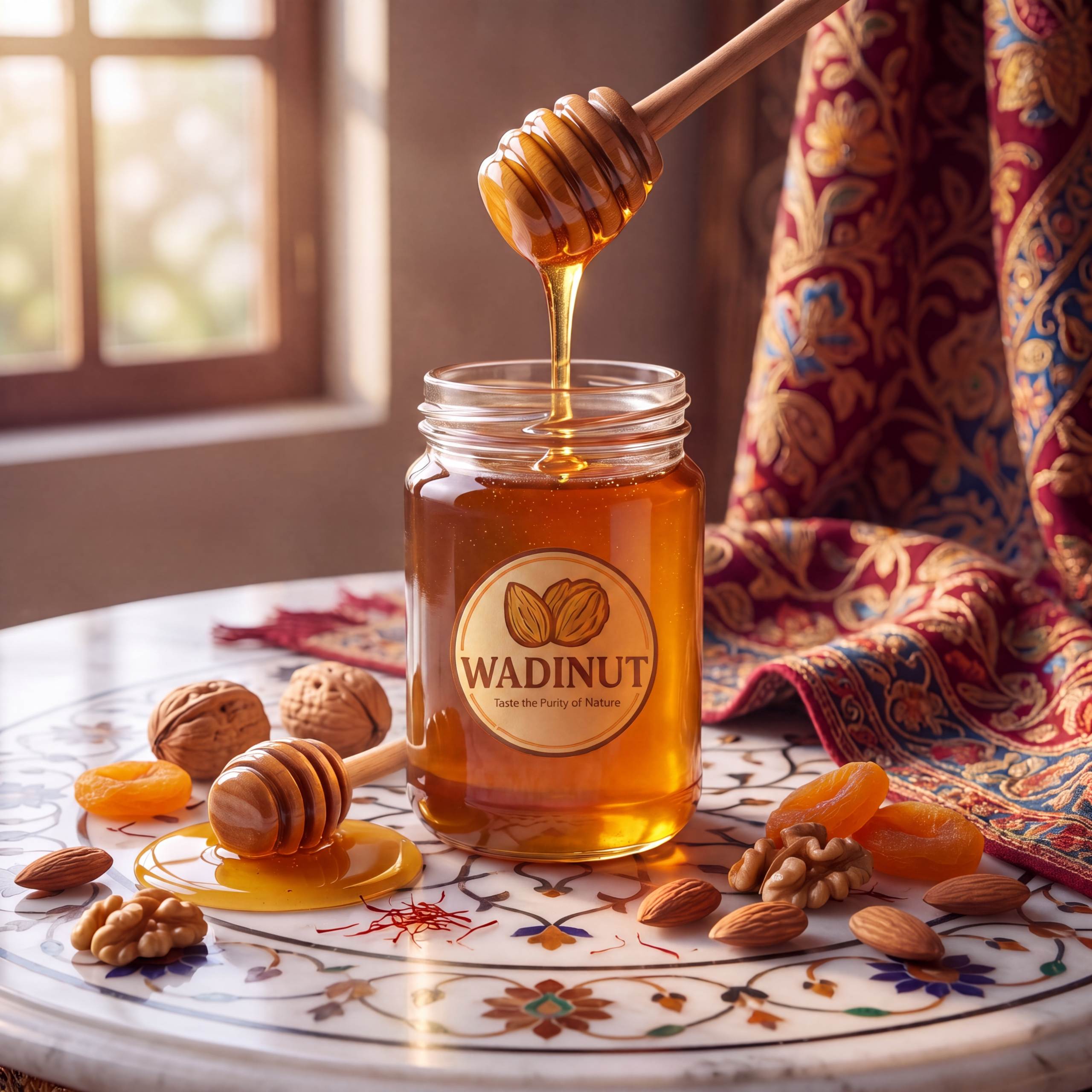
Ours comes from the Kashmir valley and is bottled raw: unheated and unfiltered beyond removing wax and debris.
Raw vs Processed Honey
Many commercially available honeys are heated and filtered to create a clear, uniform product with easier handling and a consistent appearance. Here’s what that means in practice.
Which One Should You Buy?
Processed honey is a perfectly reasonable choice. It stays clear, pours easily, and looks the same every time you buy it. If those things matter to you, it’s the practical option.
Raw honey is for people who’d rather have it as it came out of the hive, and don’t mind that it may cloud, crystallise, or vary in colour between batches.
We’d rather set that expectation than have you open the jar and wonder what went wrong.
What to Know About Honey Quality
Honey is one of the most commonly adulterated foods worldwide, and it’s also one of the hardest to judge at home. A few things worth understanding:
Why Honey Crystallises
Crystallised honey is not spoiled honey, and it’s not sugar that’s been added.
Honey is a supersaturated sugar solution. Over time, glucose separates out and forms crystals, which is why honey turns grainy or solid. It happens faster in cool temperatures and faster in honey with more glucose.
Acacia honey crystallises slowly because of its sugar profile, so it may stay liquid for a long time. Other raw honeys crystallise much faster. Both are normal.
To return crystallised honey to liquid, stand the jar in warm water. Don’t microwave it and don’t boil it.
Why Home Purity Tests Don’t Work
You’ll find a lot of home tests online — dropping honey in water, putting a flame to it, the thumb test, checking whether it dissolves.
None of these reliably distinguishes pure honey from adulterated honey. They’re widely repeated but they don’t hold up, largely because modern adulteration uses sugar syrups that behave much like honey.
Adulteration is detected in laboratories, using tests that look at sugar profiles and isotope ratios. If purity matters to you, ask the seller what testing has been done rather than running a test at home.
What Colour and Thickness Tell You
Colour tells you about the flower, not the quality. Acacia is naturally very light; mustard honey is pale and opaque; forest honey is dark. A dark honey isn’t better or worse than a light one.
Thickness varies with moisture content and temperature. Runny honey isn’t automatically diluted, and thick honey isn’t automatically pure.
The Label
Under FSSAI rules, honey sold in India has to meet defined standards and the label has to state what’s in the jar.
The label and the seller’s testing information will tell you more than anything you can observe at home.
How to Use Honey
Straight from the spoon is the most common use, and acacia’s mildness suits that.
Beyond that, it works in tea and warm drinks, drizzled over yoghurt or porridge, in salad dressings, and as a sweetener in baking. Acacia’s light flavour means it doesn’t overpower whatever it’s added to — which is why it’s often preferred for tea over stronger honeys.
Should Honey Be Heated?
High heat can change honey’s aroma and some of its heat-sensitive components. If you want to preserve its original flavour, add it after the drink or dish has cooled slightly.
For baking, honey is fine, though you’re not getting the raw benefit at oven temperatures.
Important: Honey should not be given to infants under one year of age. This is a recognised safety guideline related to the risk of infant botulism, and it applies to all honey, raw or processed.
This page describes culinary use only. For any question about honey and a health condition or diet, speak to a qualified doctor.
How to Store Honey
Honey is one of the few foods that doesn’t really spoil, but it does change.
- Room temperature, in a cool dry place
- Don’t refrigerate — cold speeds up crystallisation
- Keep the lid closed; honey absorbs moisture from the air
- Always use a dry spoon. Water introduced into the jar can cause fermentation
- If it crystallises, stand the jar in warm water rather than microwaving
Crystallisation is normal and reversible. Don’t consume honey that smells fermented or alcoholic, shows mould, has a leaking or swollen container, or appears otherwise contaminated. If you’re unsure, discard it.
Why Buy Honey From Waadi Nut
Raw and unfiltered. Our honey is not pasteurised and is filtered only to remove wax and debris. It may cloud or crystallise, which is what raw honey does.
No added flavour or colour: Our ingredient declaration and applicable batch information are clearly mentioned on the label.
Single source, acacia blossom. Sourced during the acacia flowering season through beekeepers and suppliers in the Kashmir Valley.
Sealed jars. Honey absorbs moisture and odour from the air, so it’s sealed rather than sold loose.
Reviews
There are no reviews yet.