What Makes Kashmiri Kesar Different?
Saffron is the most expensive spice in the world, and also one of the most commonly adulterated. That combination is why buying it is difficult.
Kesar is the dried stigma of the Crocus sativus flower. Each flower produces three stigmas, and they have to be picked by hand, in a season that lasts a few weeks.
Kashmir is India’s best-known saffron-growing region, with Pampore in Pulwama district at the centre of its production. Saffron is also grown in smaller quantities in other parts of Jammu and Kashmir. The flowering season runs through late October and November, and the harvest happens over a matter of weeks.
Kashmiri saffron threads are typically darker red and shorter than Iranian saffron, which dominates global supply. Iranian saffron is not inferior – it’s excellent, and most saffron sold worldwide comes from there. The differences are in appearance and aroma profile rather than one being straightforwardly better.
What matters more than origin is whether what’s in the pack is actually saffron.
Kesar Grades: Mongra and Lachha
Saffron is graded by which part of the stigma is included.
The colouring and aroma come from the red part. The yellow style contributes very little, which is why grades containing more of it cost less.
Which Grade Should You Buy?
Mongra contains mainly the red stigma and is generally the most expensive grade. Lachha includes some yellow style and can be a good option when it is clearly labelled and priced accordingly.
What to Know About Saffron Adulteration
Saffron adulteration takes several forms: dyed corn silk, safflower petals, coloured threads, and genuine saffron bulked out with the yellow style. Some home checks can tell you a fair amount, though none is conclusive.
What the Water Test Shows
Put a few threads in a small amount of warm water and wait.
Genuine saffron usually releases a golden-yellow colour gradually in warm water.
Dyed material typically releases colour quickly, and the water often turns red or orange rather than yellow. Threads that go white or colourless after soaking are a strong warning sign.
What the Rub Test Shows
Rub a thread between your fingers with a little water. Genuine saffron may leave a yellow-orange stain.
Does Taste Tell You Anything?
Saffron naturally has a complex aroma and a slightly bitter flavour, but taste alone cannot confirm authenticity.
Why Threads Aren’t Identical
Natural saffron threads are not perfectly identical. Many have a narrow base and a slightly wider or flared end, but appearance can vary.
None of these checks is conclusive on its own. Home checks may reveal obvious problems, but they cannot prove purity. Laboratory analysis using recognised saffron testing standards provides stronger evidence of quality and authenticity.
How to Use Kesar
Blooming saffron in warm milk or water before cooking helps distribute its colour and aroma more evenly through the dish.
Soak a few threads in a tablespoon of warm milk or water for ten to fifteen minutes. The liquid turns golden. Add both the liquid and the threads to whatever you’re making.
Use warm rather than vigorously boiling liquid, as prolonged high heat can reduce saffron’s delicate aroma.
How Much to Use
A few threads goes a long way – saffron is potent and using more doesn’t improve the result. Excess saffron makes a dish taste medicinal rather than better.
For most preparations serving four people, a small pinch is enough. Start with less; you can always add.
Kesar in Milk, Kahwa and Cooking
Warm milk with saffron is the most common use in India, often with a little sugar or cardamom.
In Kashmiri kahwa, saffron goes in alongside green tea, cardamom, cinnamon and almonds.
In cooking, it’s used in biryani, pulao, and sweets like kheer, phirni and shrikhand. In every case, bloom it first.
This page describes culinary use only. For any question about saffron and a health condition, diet or pregnancy, speak to a qualified doctor.
How to Store Kesar
Saffron’s aroma compounds degrade with light, heat and air.
- Airtight container, kept away from light
- A cool, dry cupboard is better than the fridge — condensation is a problem
- Don’t store near the stove
- Keep it away from strong-smelling spices
- Whole threads keep their aroma far longer than powdered saffron
Stored well, saffron keeps its quality for a long time, though the aroma gradually fades. Use the best-before date on the pack as your guide.
Why Buy Kesar From Waadi Nut
Sourced from the valley. Our kesar is sourced through growers and suppliers in the Kashmir saffron belt around Pampore.
Pure threads, nothing added. No added colour, filler or bulking agents. Our grade and sourcing details are clearly mentioned on the pack.
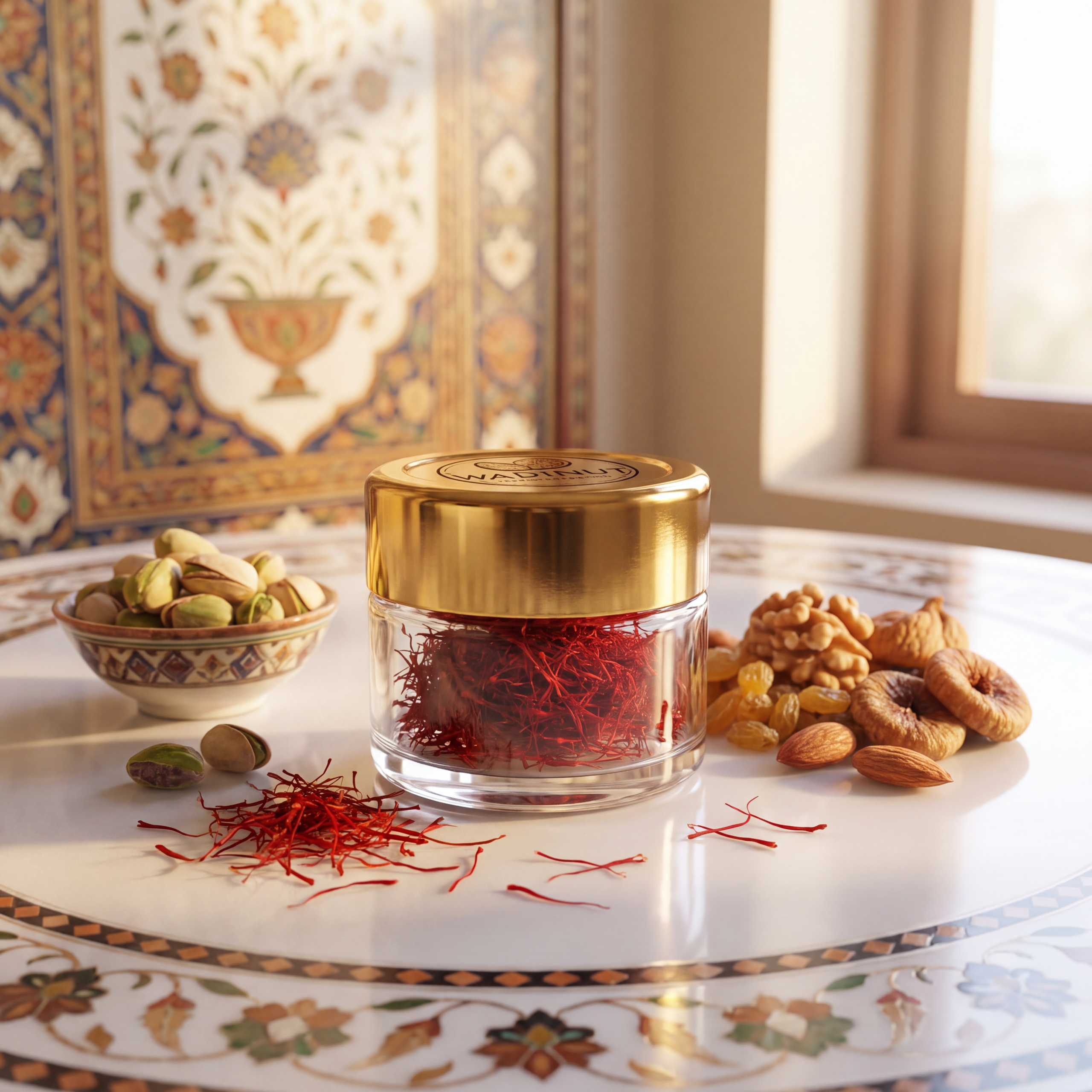
Sealed packaging. Saffron loses aroma to air and light, so it’s packed in sealed containers rather than loose sachets.
Reviews
There are no reviews yet.